I started this post on my computer three days ago, before I realized my communication would be limited to a 2G connection on my phone. I’m now frantically trying to transcribe it to my phone (since transferring it directly is apparently no straightforward process), before my computer dies.
I’m back on the grid! Well, I’m sort of back on the grid. I’m typing this on my phone, and hopefully, if the winds are blowing in the right direction, sending it over a 2G connection. My phone, laptop, and camera were all charged here at the house, using electricity supplied by solar panels. This is in a house with no flushing toilet, no means of communication with the outside world, and only recently, running water (which, by the way, is supplied by a solar powered well pump). The house itself is a concrete slab, with cement block walls, a few rooms divided by thin (I think wood) walls, and a tin roof. Nothing more. There is no bathrooms, only a latrine (actually, three; two are full), sink, and shower, all separate, and free standing in the yard. And the friggin’ place is solar powered. I offer this as context for the rest of our trip, why the the Solar Center is here, and why we’re here.
Back to the plane ride, where I left you. We arrived in Managua Monday evening, after an uneventful flight bee corralled the students off the plane, in parallel with what appeared to be two other service, or maybe mission groups of similar size and age. I’m happy to say, we were the only of the three not wearing matching group shorts. This gaggle of gringos blended right in. After the full body thermal scan (apparently that’s a thing), on to baggage claim, which operated, and I offer no exaggeration here, far more efficiently than in any U.S. airport I’ve encountered.
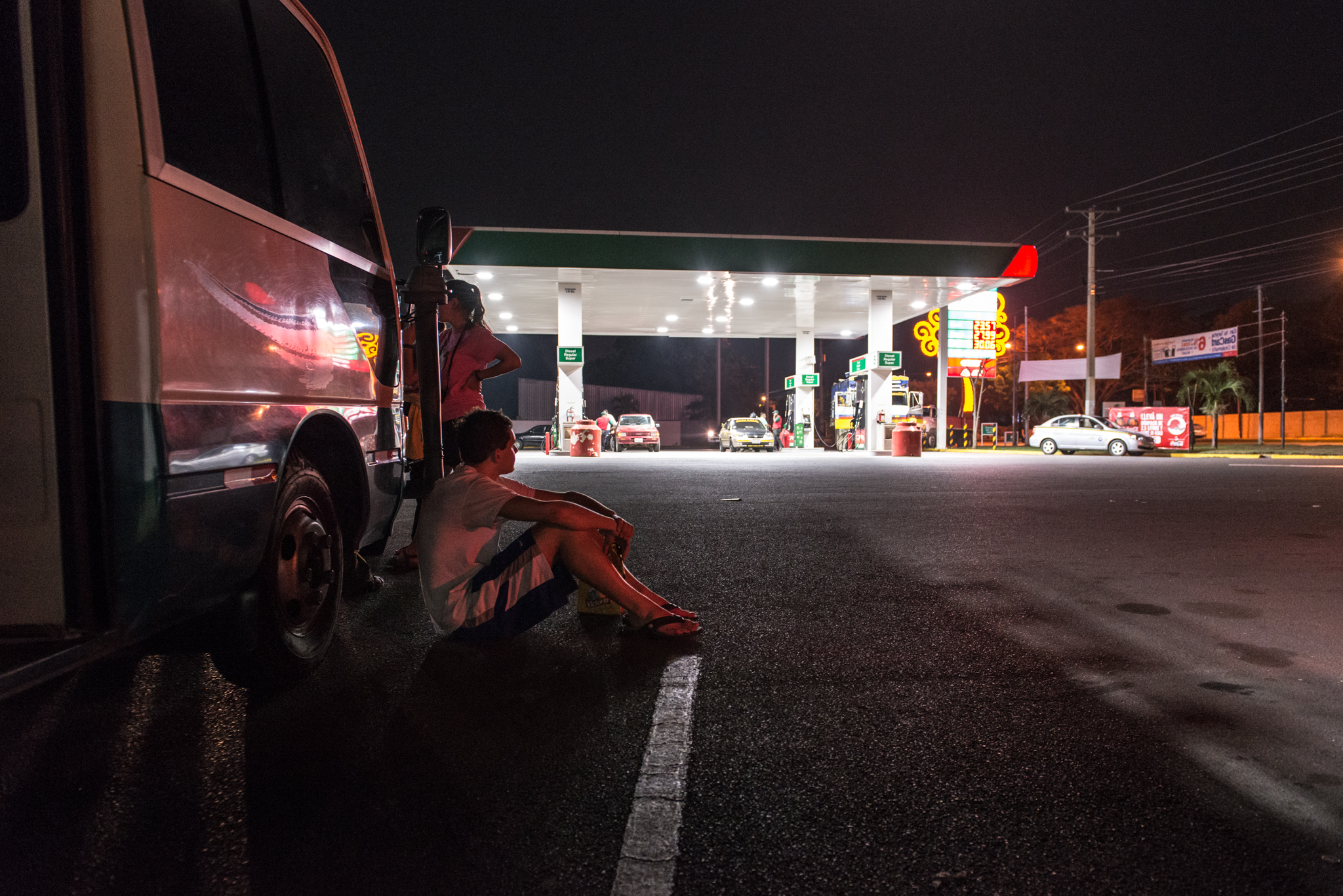
We loaded onto a van (Toyota, overloaded, underpowered, no A/C, broken odometer, running like a top), and detoured to a nearby gas station to wait for two other students to arrive. It was hot, sticky, and everyone was exhausted (these kids had finished finals and moved out of their dorms in the 72 hours prior), but it ended up being a great moment. It gave us all a chance to take it all in. The students sat in the parking lot, and over a few gas station cervezas, reflected on their preparation versus the reality of being in Nicaragua (keep in mind, several of these students had never left the U.S. prior to this trip. I lost track of how many times I heard things like “we’re actually in Nicaragua”, or “this is it”. I live vicariously through them in this moment. These feelings still surface when I go to new places, but there’s something special, visceral about the first few times you travel outside your comfort zone.
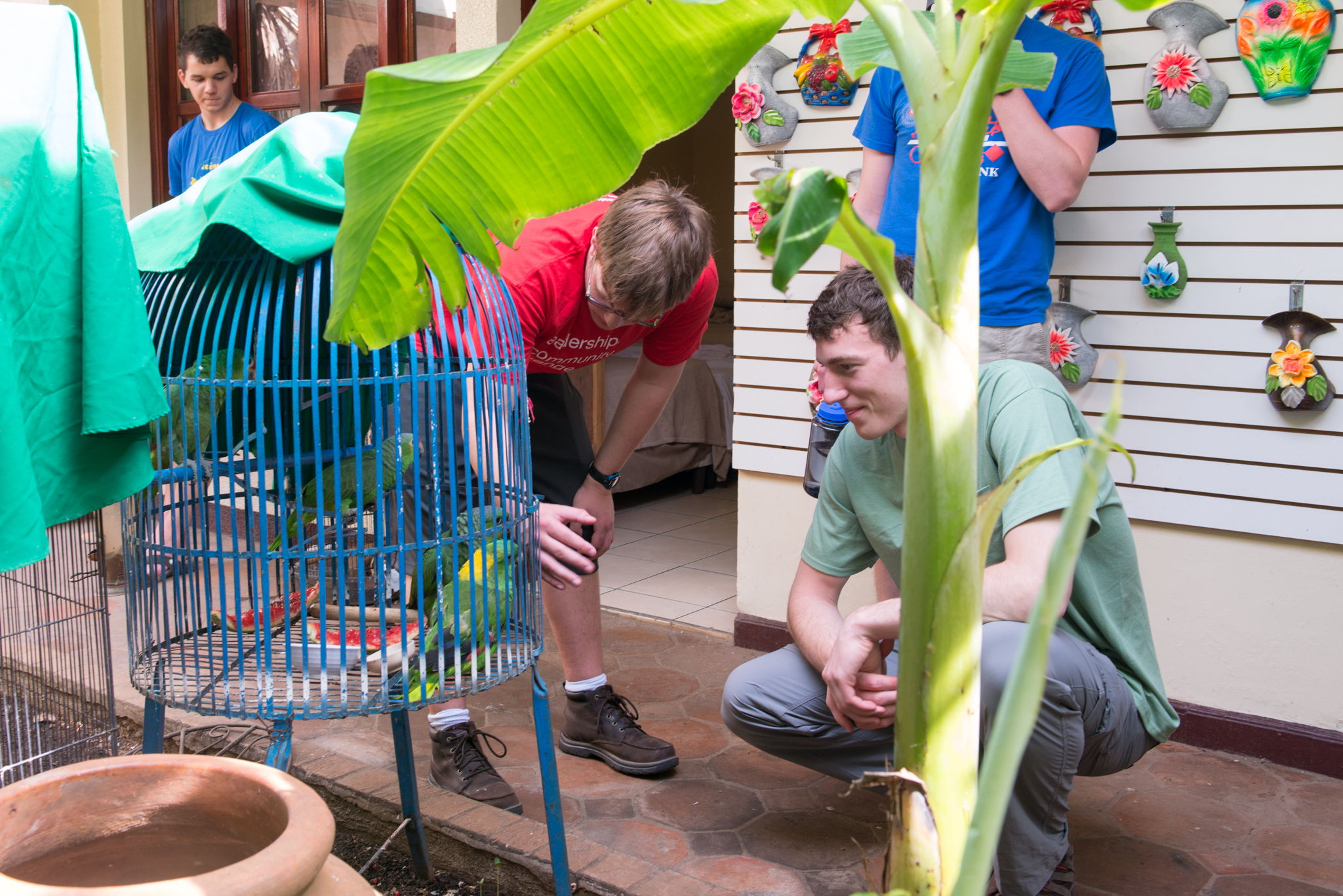
We stayed the night at a small hotel in Managua on Monday night. Nothing really noteworthy, because everyone was too tired to function by the time we got there. The lobby full of birds, countless (some terrifying) masks hanging on every wall (including the guest rooms), and the back-flipping squirrel are probably worth a mention.

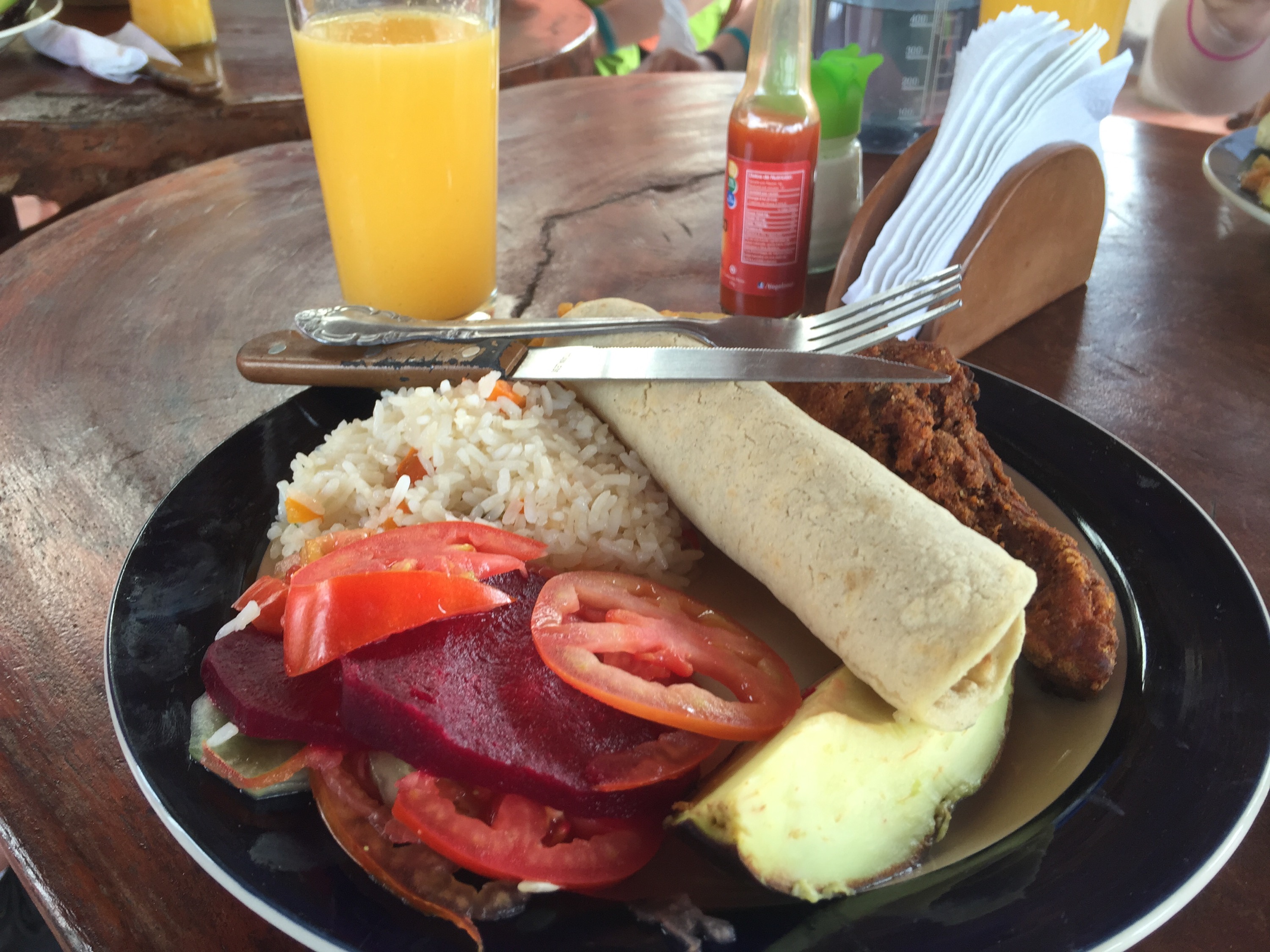
Tuesday morning, we loaded up and headed for Sabana Grande. The ride was uneventful and hot. Everyone sitting on the right side of the van got some level of sunburn. That day, we learned the UV index goes to 13. We arrived at the Solar Center around lunchtime, and were greeted with a large meal of fried chicken, rice, beans, tortilla, avacado, beets and tomatoes, cooked at the solar restaurant. Thus began our 10 days of being over fed.
Enter Susan. Susan is the person who helped the locals take this idea of the Solar Center, and turn it into what it is today, and is continuing to drive it’s organic evolution. The Solar Center (El Centro Solar), is a small plot of land, maybe 15 acres, in the hills of Totalgalpa, consisting of the Solar Center building, the solar restaurant, a small building used as a school, a bath house with the only flushing toilets in the community, and a large garden. I’ll save the story of how El Centro Solar got its start, and how it evolved, for a later time. I’m still trying to understand it, as it’s completely nonlinear. I need more of a download from Susan before I can make sense of it. For now, I’ll focus on what we’ve been working on.
After a brief tour of the center, we got right to work helping the workers construct solar cookers and solar dryers. The principle behind both devices is relatively simple. In the cooker, an insulated box with a hinged lid is lined with reflective material. The top of the inside is covered in glass. The lid is angled to reflect the sun through the glass and into the box. The food is placed under the glass. That’s it. Simple. But the cookers get to well above 300 degrees, and can cook a mean batch of chicken. The dryers have a similar theory of operation, but after concentrating heat, channel it through an insulated box, and out the top. Food and plants are placed in perforated trays in the box, where they are dried. I’ll wait until my later post to talk about the “why” of the solar cookers, but for now, suffice to say, these things save lives.
Our group of 18 was divided into three teams, one building a dryer, and two building cookers (I was on team dryer). Each team was headed by one of the local women to guide in the construction. This is essentially what we’ve been doing during the day, through lunchtime yesterday. This has been immensely fun. Watching the students go from passive participants to taking an active role in helping improve the design and construction in just a few days is a really cool transformation to witness. It takes me back to when I went through the same experience in my ETHOS immersion in 2007.
The language barrier has been an interesting challenge during construction. Each team has a translator, but ours promptly abandoned us. Ramalda, our Nicaraguan team leader, a no BS, all business woman, speaks no English, and seems to have no interest in slowing her Spanish for our benefit. I love this woman. She does her thing, and let’s us catch up, if we can, and we usually can’t. Side note, Ramalda doesn’t read or write, but plays a crucial role in design and construction at the center.
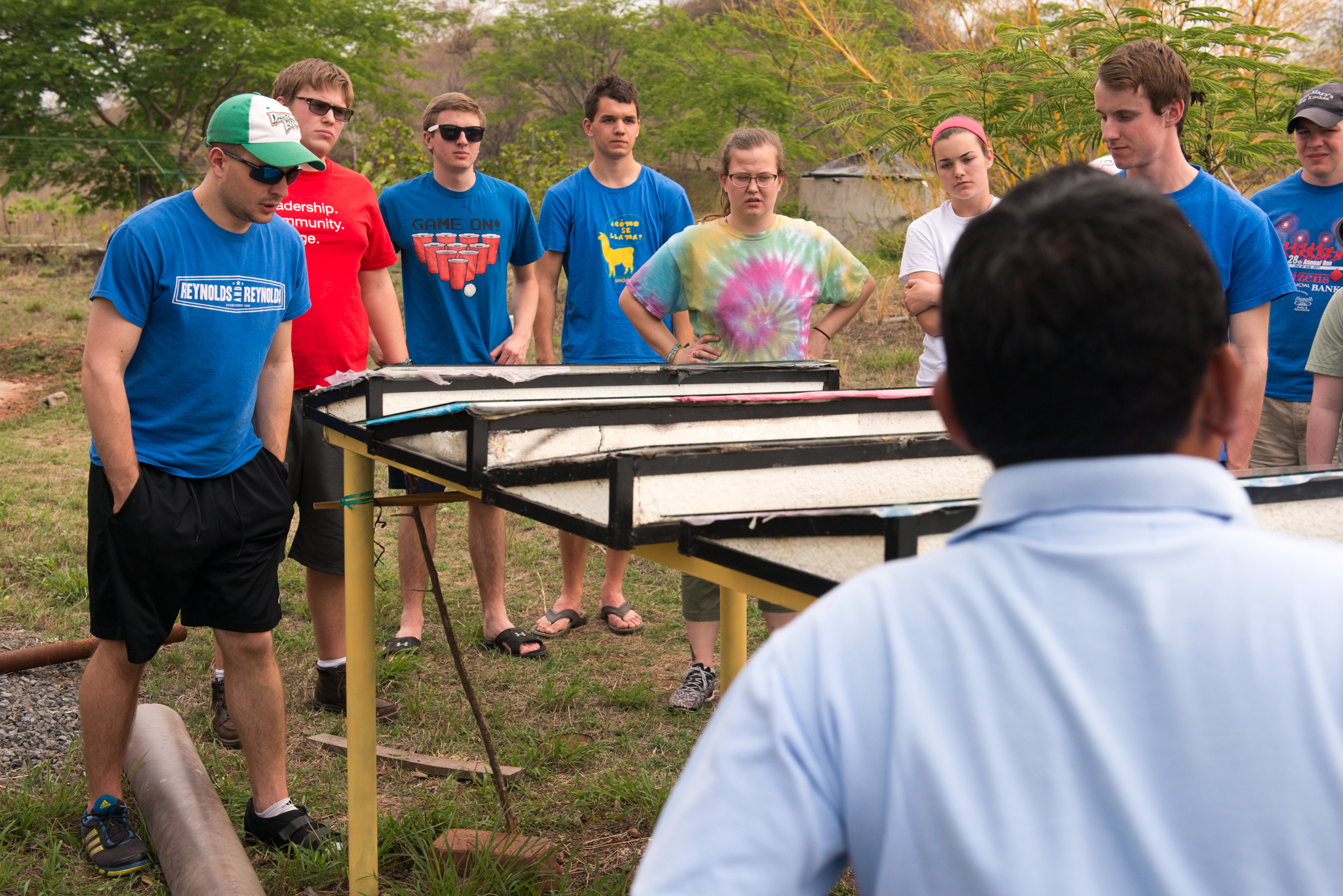
That, in a very smal package, is what we’ve been up to at the Center. There’s so much more to tell. The families, the community, the Solar Center, Susan, and on and on. The lack of connectivity has made updates difficult (hopefully this will actually post), but I wanted to at least get something out. I may have to tell the rest of the story after the trip.
A quick personal reflection, now that we’re halfway through the trip (this may not have much context, because I haven’t told you about so many things): Being here gives me an overwhelming sense of “we’re all in this together”. I thought we were coming to help fix, or get people out of some situation, or problem, but we’re here to help people survive. We’re using our talents to make life a little more livable, and survivable. Isn’t that what we’re all trying to do, survive? We should be using our talents, as much as we can, to do just that. I don’t propose we all quit our jobs and move to the third world, but couldn’t we do a little more than we’re doing? Those of us who have the knowledge to make a positive contribution to humanity, have the power, and responsibility to do so. The end game is the same for all of us. We’re all in this together.
 Jon Obergefell